The Technically Challenged Boss
Avoids technical detail until they cannot, then leans on process or authority instead.
“Isn’t the cloud just a fancy name for the internet?”
The moveTranslate generously, but do not become a permanent rescue function.
The book · the courses · the free audit
Weak leadership is not a rare accident. It is the predictable output of how organizations promote people — and patterns can be read, planned around, and outlasted. Start with the book, or go straight to the work.
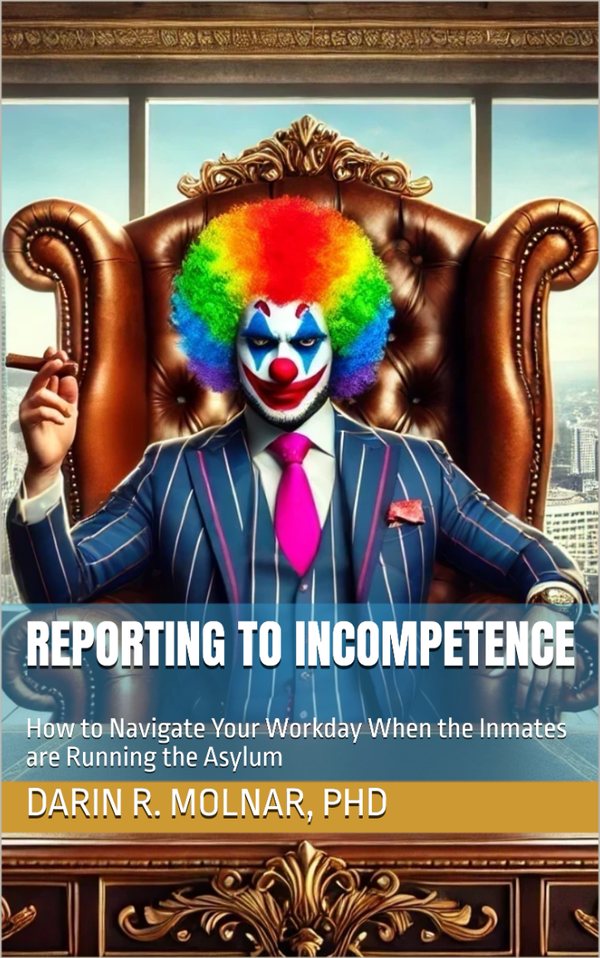
The premise
A strong salesperson does not automatically become a strong sales manager. A gifted engineer does not automatically become a capable engineering leader. Organizations behave as though technical excellence, personal polish, and leadership capacity are interchangeable. They are not.
The result is familiar: confusion at the top of a team, avoidable friction in daily operations, and talented employees spending far too much energy compensating for poor judgment above them. It rarely arrives with dramatic music. It accumulates — first as inconsistency, then as rework, unnecessary urgency, decision paralysis, and meetings that consume time without producing direction.
Dedicated to everyone who has had to keep doing good work while weak leadership made the work harder. You are not alone.Dedication, Reporting to Incompetence
This site is the practical half of that argument. The book explains why it happens. The courses are about what a sensible person does on Tuesday morning.
Chapter Two, in brief
Incompetent managers are not all incompetent in the same way, and the response that works on one makes another worse. Find yours — then find the move.
Avoids technical detail until they cannot, then leans on process or authority instead.
“Isn’t the cloud just a fancy name for the internet?”
The moveTranslate generously, but do not become a permanent rescue function.
Generates confusion faster than clarity. Priorities are announced, revised, and half-withdrawn.
“Are we still doing the thing they mentioned two weeks ago?”
The movePut decisions in writing and make the written record the default.
Will not name a problem, so the problem is left for the team to absorb quietly.
“Let’s all just get along and revisit this next quarter.”
The moveNarrow the decision until saying nothing is no longer an available option.
Inspects everything, trusts nothing. Often a strong individual contributor promoted without support.
“Copy me on all of it and I’ll take a look tonight.”
The moveFlood the channel they are anxious about so they stop reaching into the ones they are not.
Endless direction, no sequence. Every idea arrives urgent and unscoped.
“What if we reimagined the whole thing by Friday?”
The moveConvert vision into two costed options and let them choose one.
Structurally absent. Decisions rot in a queue nobody else is allowed to clear.
“Sorry — just seeing this now.”
The moveMove to decide-unless-told-otherwise, in writing, with a deadline attached.
The curriculum
Six self-paced courses and one live clinic. Scripts you can say out loud, templates you can send today, and an honest treatment of the question everyone eventually reaches: stay, or go.
Diagnosing Managerial Incompetence Without Becoming a Cynic
Before you react, get the diagnosis right. General resentment solves nothing; accurate reading usually does.
Field Tactics for the Six Difficult Bosses
Managing up is not servility. It is adaptation — reducing the damage weak leadership creates without endorsing it.
Nine Steps Out — and an Honest Case for Staying
Whenever possible, do not resign without a firm next step. Professional exits preserve optionality.
And if you are the boss
Most people do not set out to become the kind of manager others must work around. They arrive there through habit, fear, poor incentives, weak models, or some combination of all four. If parts of the book make you uncomfortable, treat the discomfort as useful information.
The Manager in the Mirror is the whole curriculum read from the other side of the desk — the same six archetypes, but as a mirror, followed by the ordinary habits healthy leadership is actually made of.
Common questions
Darin R. Molnar, PhD — author of Reporting to Incompetence. He holds BA and MA degrees in anthropology and a doctorate in organizational management with a specialization in leadership, and has spent more than four decades as a business owner, institutional leader, college professor, and hands-on producer.
No. The courses stand on their own and go considerably further than the book does, particularly on scripts, templates, and practice. If you want the argument before the application, the book is the cheapest way to get it.
The six courses are self-paced and available immediately after purchase. The Four-Week Clinic is live and capped at twelve seats.
No. The book is not a manual for mocking your boss and neither is the curriculum. The aim is to help you do good work, keep your credibility, protect your health, and choose your next move deliberately. If your manager improves along the way, that is a bonus rather than the goal.
Not from us. We never publish enrollment, never sell or share your information, and never contact your employer. Use a personal email address if you would rather keep the receipt out of a company inbox.